
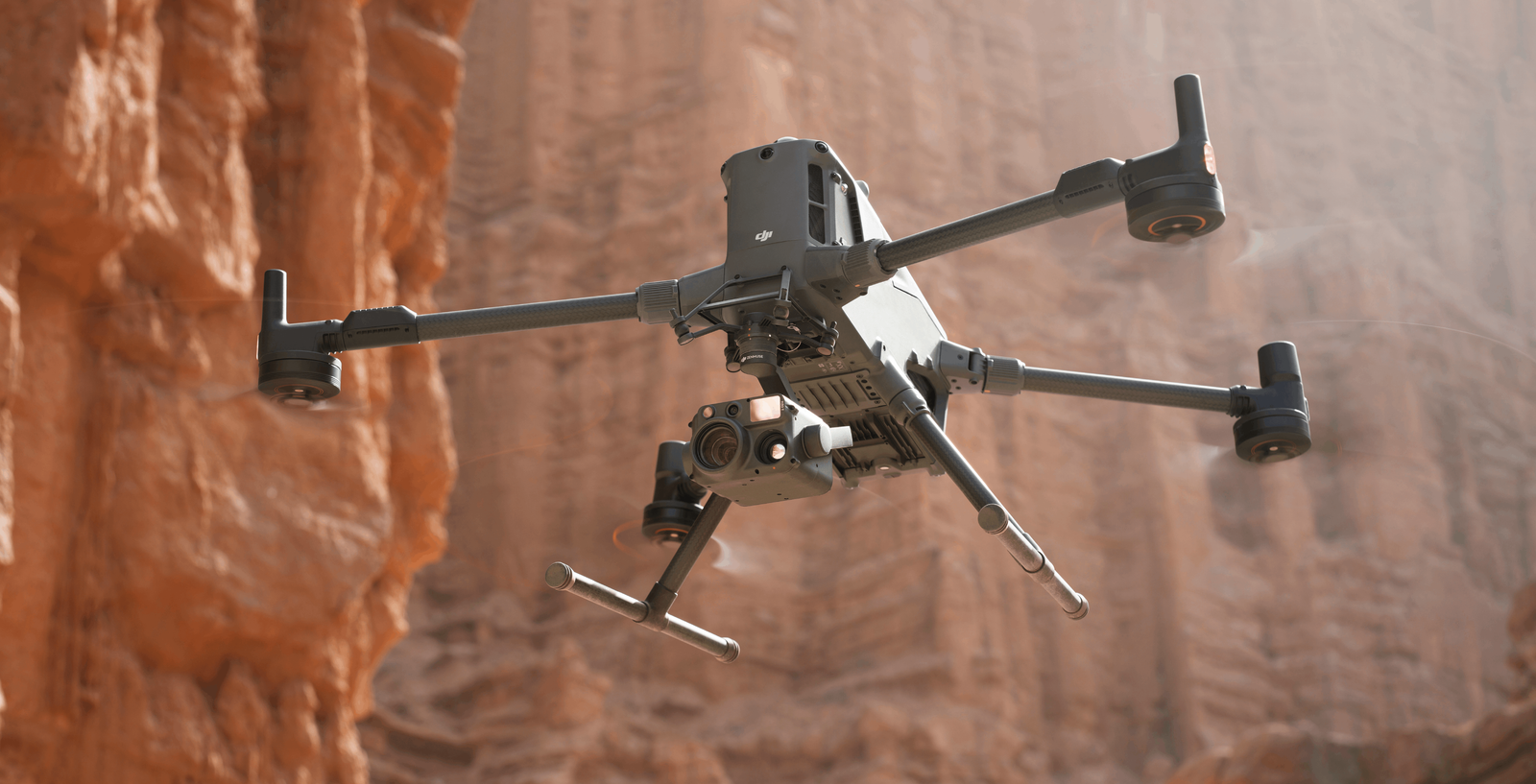
The DJI Zenmuse H30 and DJI Zenmuse H30T share the same platform name, but they are designed for fundamentally different operational outcomes.
Choosing between them is not about features - it’s about whether your operation is driven by visual inspection and documentation, or detection, situational awareness, and response.
This article explains the real-world differences between H30 and H30T, when each delivers value, and where buyers commonly choose the wrong payload.
High-Level Positioning
Both payloads share:
-
Advanced zoom optics
-
Enterprise-grade stabilisation
-
Integration with Matrice platforms
-
Similar operational handling
The difference is thermal intelligence - and everything that flows from it.
Zenmuse H30 - Built for Visual Detail and Measurement
The Zenmuse H30 is a purely visual inspection payload optimised for identifying, documenting, and analysing physical condition.
What the H30 Does Well
-
Long-range optical zoom for stand-off inspections
-
High-detail RGB capture
-
Asset condition assessment
-
Documentation and reporting
-
Daytime inspection workflows
In practice, the H30 answers questions like:
“What does this asset look like, and what has changed?”
Where the H30 Excels
-
Transmission and substation inspection
-
Towers, bridges, and structures
-
Construction and industrial assets
-
Situations where visual clarity is the primary requirement
If your workflows are built around images, annotations, and reports, the H30 is often the correct and more efficient choice.
Zenmuse H30T - Built for Detection and Decision Support
The Zenmuse H30T adds a radiometric thermal sensor to the same visual platform, shifting the payload from inspection to situational awareness.
What the H30T Does Well
-
Heat anomaly detection
-
Night and low-visibility operations
-
Electrical fault identification
-
Search and response workflows
-
Rapid decision support
The H30T answers a different question:
“Where is the problem right now?”
Where the H30T Excels
-
Power and utility inspections
-
Fire and hotspot detection
-
Emergency response
-
Perimeter and security monitoring
-
Operations where speed of insight matters more than visual detail
Thermal data reduces interpretation time - but introduces its own limitations.
Visual Accuracy vs Thermal Awareness


Common Buying Mistakes
Buying H30T “Just in Case”
Thermal payloads are often purchased defensively.
If thermal data is:
-
Rarely used
-
Not part of standard workflows
-
Not tied to decisions
Then the added cost and complexity go largely unused.
Expecting Thermal to Replace Visual Inspection
Thermal imagery highlights anomalies — it does not explain them.
Most thermal workflows still require follow-up visual inspection, either in the same flight or a separate one.
When H30 Is the Better Choice
Choose the Zenmuse H30 when:
-
Inspections are primarily visual
-
Reports and imagery are the deliverable
-
Flights are daytime and planned
-
Budget efficiency matters
-
Thermal is not a routine requirement
For many infrastructure owners, this is most of the time.
When H30T Is Justified
Choose the Zenmuse H30T when:
-
Heat detection drives decisions
-
Night or low-visibility ops are required
-
Time-to-insight is critical
-
Safety or emergency response is involved
In these cases, thermal capability is not optional - it is foundational.
Mirrormapper’s Take
The H30 and H30T are not “good” and “better” - they are different tools.
-
H30 is an inspection and documentation payload
-
H30T is a detection and response payload
The fastest way to waste budget is to buy thermal capability without a thermal-driven workflow.
The fastest way to miss critical issues is to rely on visual inspection when detection is required.


