
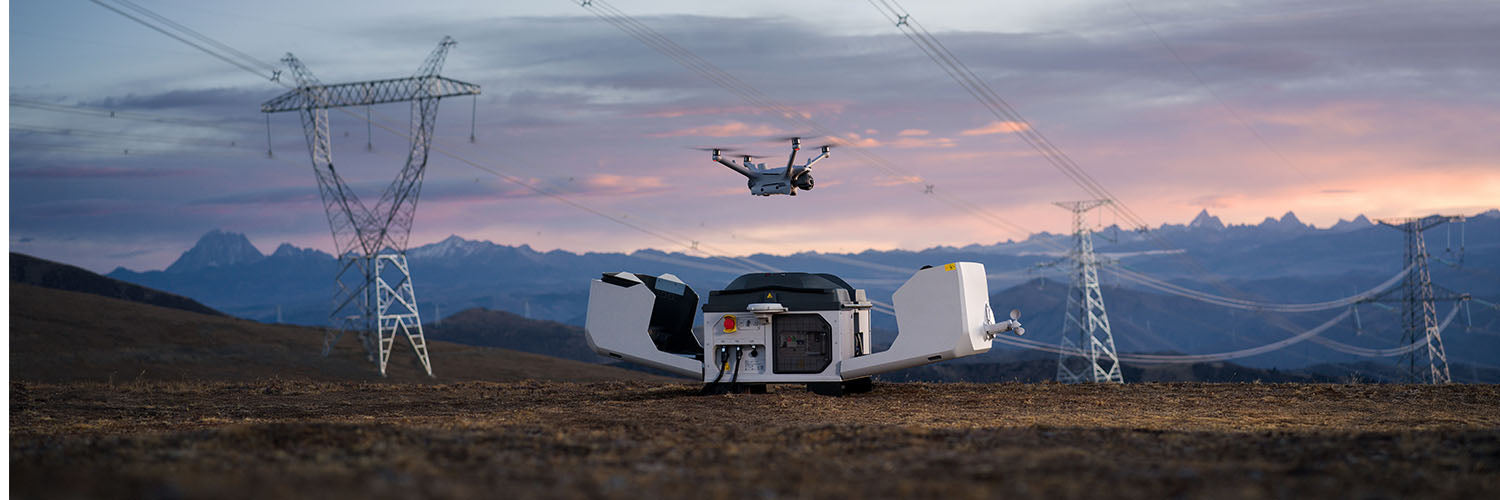
Docked drone systems promise autonomous operations, reduced labour, and consistent data capture. In practice, the value of a docked solution depends less on autonomy marketing and more on system resilience, aircraft capability, and operational reliability.
This article provides a practical comparison between DJI Dock 2 and DJI Dock 3, focusing on real-world deployment differences, not brochure claims.


| System | Market Position | Intended Deployment |
|---|---|---|
| Dock 2 | Compact autonomous dock | Fixed-site, light enterprise monitoring |
| Dock 3 | Full enterprise dock platform | Multi-role, higher-risk, higher-value operations |
Aircraft Capability: The Single Biggest Difference
The most important distinction between Dock 2 and Dock 3 is the aircraft they support.
DJI Dock 2 — Matrice 3D / 3TD
Dock 2 is designed around the Matrice 3D / 3TD platform. These aircraft are:
-
Compact
-
Lightweight
-
Optimised for short, repeatable missions
-
Best suited to visual inspection, perimeter monitoring, and basic thermal tasks
They perform well in controlled environments but are not designed for high-wind tolerance, heavy weather, or long-range operations.
DJI Dock 3 — Next-Generation Enterprise Aircraft
Dock 3 supports a new class of aircraft designed specifically for dock-first operations, with improvements across:
-
Wind resistance
-
Weather tolerance
-
Flight endurance
-
Payload performance
-
Redundancy and fault tolerance
In operational terms, this means Dock 3 moves from:
“automated convenience”
to
“operationally defensible autonomy”
This shift matters significantly for government, utilities, and critical infrastructure operators.
Environmental Hardening & Reliability
Dock 2: Suitable, But Selective
Dock 2 performs well in:
-
Moderate climates
-
Low-wind regions
-
Controlled industrial sites
However:
-
Weather margins are narrow
-
Mission aborts increase under poor conditions
-
Site selection becomes critical
For many operators, this limits Dock 2 to daytime, fair-weather deployments.
Dock 3: Designed for Real-World Conditions
Dock 3 addresses the most common operational pain points seen in Dock 2 programs:
-
Improved environmental sealing
-
Expanded operating temperature range
-
Better precipitation tolerance
-
More robust recovery logic
This directly translates to:
-
Higher mission completion rates
-
Fewer aborted sorties
-
More predictable scheduling
For continuous operations, reliability beats autonomy every time.
Autonomy, Oversight, and Operational Reality
Both Dock 2 and Dock 3 require:
-
Airspace approval
-
Operational oversight
-
Human-in-the-loop decision making
Neither system eliminates responsibility.
Where Dock 3 Advances
Dock 3 improves:
-
Automated health checks
-
Fault detection and recovery
-
Consistency across repeat missions
-
Integration with enterprise command workflows
This reduces operator cognitive load, even if it does not remove human accountability.
Data Quality and Mission Value
Dock systems are only as valuable as the data they produce consistently.
| Area | Dock 2 | Dock 3 |
|---|---|---|
| Visual inspection | Strong | Stronger (better stability) |
| Thermal monitoring | Good | Improved sensitivity & repeatability |
| Change detection | Limited by conditions | More reliable over time |
| Post-event validation | Conditional | Highly dependable |
Dock 3’s advantage is not raw sensor specs - it is repeatability under variable conditions.
Cost, Complexity, and ROI
Dock 2 ROI Profile
-
Lower upfront cost
-
Faster initial deployment
Suitable for:
-
Proof-of-concept programs
-
Single-site monitoring
-
Budget-constrained teams
However:
-
Limited scalability
-
Higher operational exceptions
-
Less suitable for mission-critical roles
Dock 3 ROI Profile
-
Higher capital investment
-
Longer planning and approval cycles
Justified when:
-
Downtime has real cost
-
Data reliability matters
-
Programs scale beyond one site
Programs scale beyond one site
Dock 3 is not about saving money - it is about reducing operational risk.
Mirrormapper’s Take
The decision between Dock 2 and Dock 3 is not about “new vs old.” It is about operational maturity.
-
Dock 2 works when autonomy is helpful but not critical
-
Dock 3 works when autonomy must be trusted
For most enterprise operators:
-
Dock 2 suits controlled, predictable environments
-
Dock 3 suits high-value, high-risk, or regulatory-sensitive programs
Autonomy only delivers ROI when the system works when conditions are not ideal.


