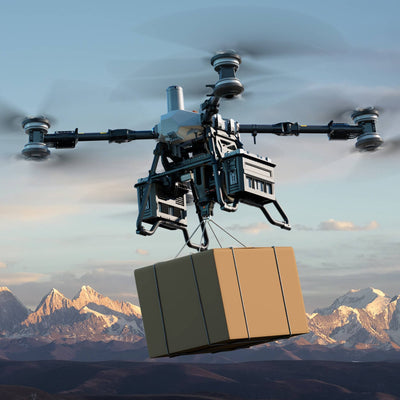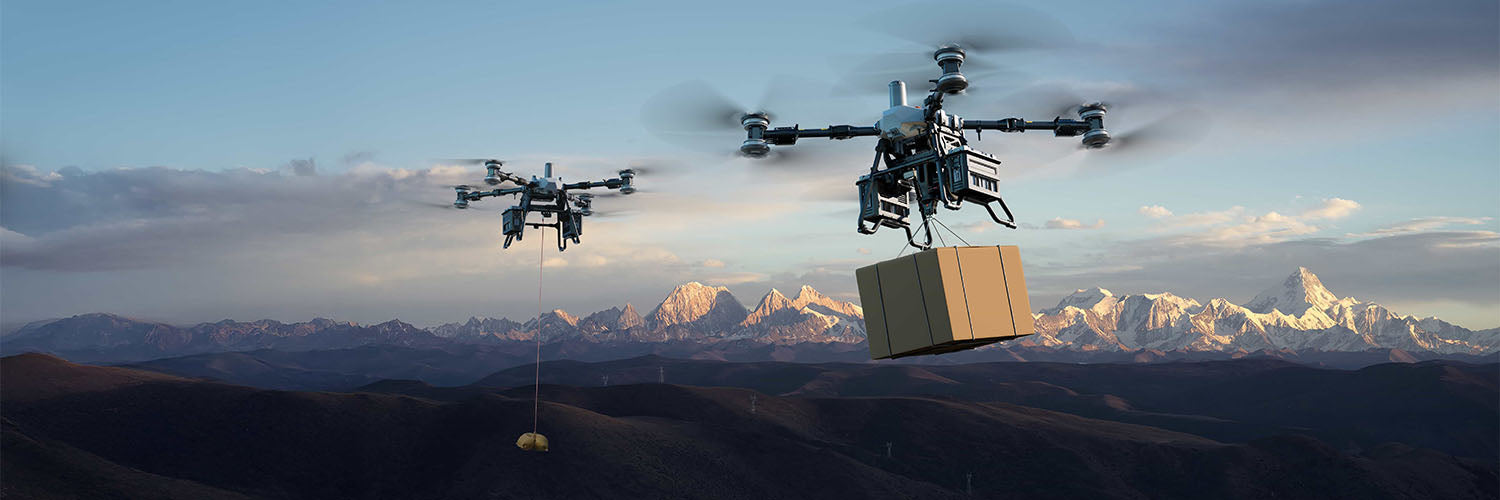
When Heavy-Lift Drones Actually Make Financial Sense
Heavy-lift drones generate strong interest—and just as much misunderstanding.
Too often, platforms like the FlyCart 100 are evaluated as novel logistics tools rather than as vehicle, vessel, or labour replacements. When assessed this way, expectations drift, ROI becomes unclear, and programs stall before they ever scale.
This article outlines when heavy-lift drones genuinely make financial sense in Australia, the operational conditions required for success, and the scenarios where they do not.
Why Heavy-Lift Drones Are Not General-Purpose Tools
Heavy-lift drones are not designed to make logistics marginally faster or more innovative.
They are designed to remove friction from high-cost, high-risk movements of people and equipment.
They perform best when:
-
Access is difficult, delayed, or hazardous
-
Payload movements are repetitive and predictable
-
Time, safety, or availability constraints dominate cost
-
Alternatives involve vehicles, boats, helicopters, or manual handling
They perform poorly when:
-
Payload demand is irregular
-
Sites are congested or urban
-
Regulatory effort outweighs delivery value
-
Ground access is already efficient
Heavy-lift drones are context-specific assets, not universal solutions.
The Core Economic Question
A heavy-lift drone is justified only when it clearly replaces one or more of the following:
-
Vehicle travel to remote or restricted sites
-
Boat or barge transfers
-
Helicopter sling loads
-
Manual carry across hazardous terrain
-
Contractor mobilisation and demobilisation
-
Task delays caused by access constraints
If a drone does not displace an existing cost or risk, it becomes an additive expense, not an operational improvement.
Where Heavy-Lift Drones Deliver Clear ROI
Remote and Isolated Operations
Mining sites, offshore facilities, island assets, and alpine infrastructure often incur disproportionate access costs. Even simple payload movements can trigger hours-or days-of delay.
In these environments, heavy-lift drones reduce:
-
Travel time
-
Exposure hours
-
Standby labour
-
Weather-related disruption
Here, the economics are driven by access avoidance, not payload novelty.
Emergency and Time-Critical Logistics
Emergency services and critical-response teams benefit when delivery time directly affects outcomes.
Typical use cases include:
-
Medical or safety equipment delivery
-
Power restoration components
-
Remote situational support
In these scenarios, value is created as much by time reduction and risk avoidance as by direct cost savings.
Industrial Maintenance and Operations
Routine delivery of tools, spares, and consumables to elevated, offshore, or restricted locations often involves cranes, shutdowns, or complex permitting.
Heavy-lift drones can:
-
Reduce task duration
-
Avoid downtime
-
Improve worker safety
-
Increase maintenance frequency without increasing labour
When embedded into maintenance workflows, they remove friction across entire processes.
Where Heavy-Lift Drones Usually Fail
Urban and Congested Environments
In metropolitan areas, airspace complexity, population density, and regulatory overhead quickly erode viability. Traditional logistics are usually faster, cheaper, and simpler.
Low-Frequency or Ad-Hoc Tasks
Heavy-lift drones require consistent utilisation to amortise cost.
Infrequent payload movements lead to idle assets and poor ROI.
Poorly Defined Payload Profiles
Successful programs define payload:
-
Weight
-
Dimensions
-
Frequency
-
Distance
-
Handling requirements
Vague or shifting requirements undermine both compliance and economics.
Compliance Is the Gating Factor
In Australia, heavy-lift operations commonly intersect with:
-
BVLOS requirements
-
Increased ground-risk considerations
-
Airspace coordination
-
Payload-specific risk assessments
-
Enhanced organisational oversight
Compliance effort scales with payload mass, operating environment, and autonomy.
Ignoring this reality leads to stalled approvals and sunk costs.
Labour and Utilisation Matter More Than Lift Capacity
Payload capacity attracts attention—but utilisation determines viability.
Key questions include:
-
How many payload movements occur per day or week?
-
Who operates and supervises the system?
-
Are deliveries predictable or reactive?
-
How often is the aircraft idle?
High-capacity drones that fly rarely rarely deliver value.
Quantifying Payload Economics with the FlyCart 100 Calculator
Assessing heavy-lift drone viability requires more than headline payload figures. What matters is how weight, distance, cycle time, and utilisation interact in real operations.
To support objective evaluation, MirrorMapper has developed a FlyCart 100 Payload & Time Calculator for enterprise planning.
Free Payload Calculator Tool HERE
The calculator allows organisations to:
-
Model realistic payload weights and delivery distances
-
Understand cycle times and daily throughput limits
-
Test utilisation assumptions against operational constraints
-
Identify where heavy-lift drones replace vehicles, vessels, or labour
-
Expose scenarios where economics break down early
Rather than relying on optimistic assumptions, the calculator provides a grounded starting point for determining whether FlyCart 100 deployments are operationally and financially defensible.
Use the FlyCart 100 Calculator
Model payload weight, distance, and delivery frequency to assess whether a heavy-lift drone makes sense for your operation.
This tool is best used before procurement, as part of a broader feasibility and compliance assessment.
Heavy-Lift Drones as System Components
The most successful deployments treat heavy-lift drones as part of a logistics system, not a standalone asset.
This includes:
-
Defined task routing
-
Clear decision triggers
-
Integration with maintenance or response workflows
-
Trained operators and supervisors
-
Governance and reporting structures
When embedded correctly, heavy-lift drones reduce friction across entire operational chains.
A Practical Rule of Thumb
Heavy-lift drones make financial sense when:
-
They replace vehicles, vessels, helicopters, or manual handling
-
Payload movement is frequent and predictable
-
Access or safety constraints dominate cost
-
Compliance effort is planned, not improvised
They do not make sense when:
-
They are purchased to “try logistics by drone”
-
Payload demand is unclear
-
Alternatives are already efficient
-
Regulatory pathways are ignored
Final Thought
Heavy-lift drones are not experimental tools.
They are industrial logistics assets.
When deployed with clear economic intent, they reduce cost, risk, and delay.
When deployed without it, they become expensive demonstrations.
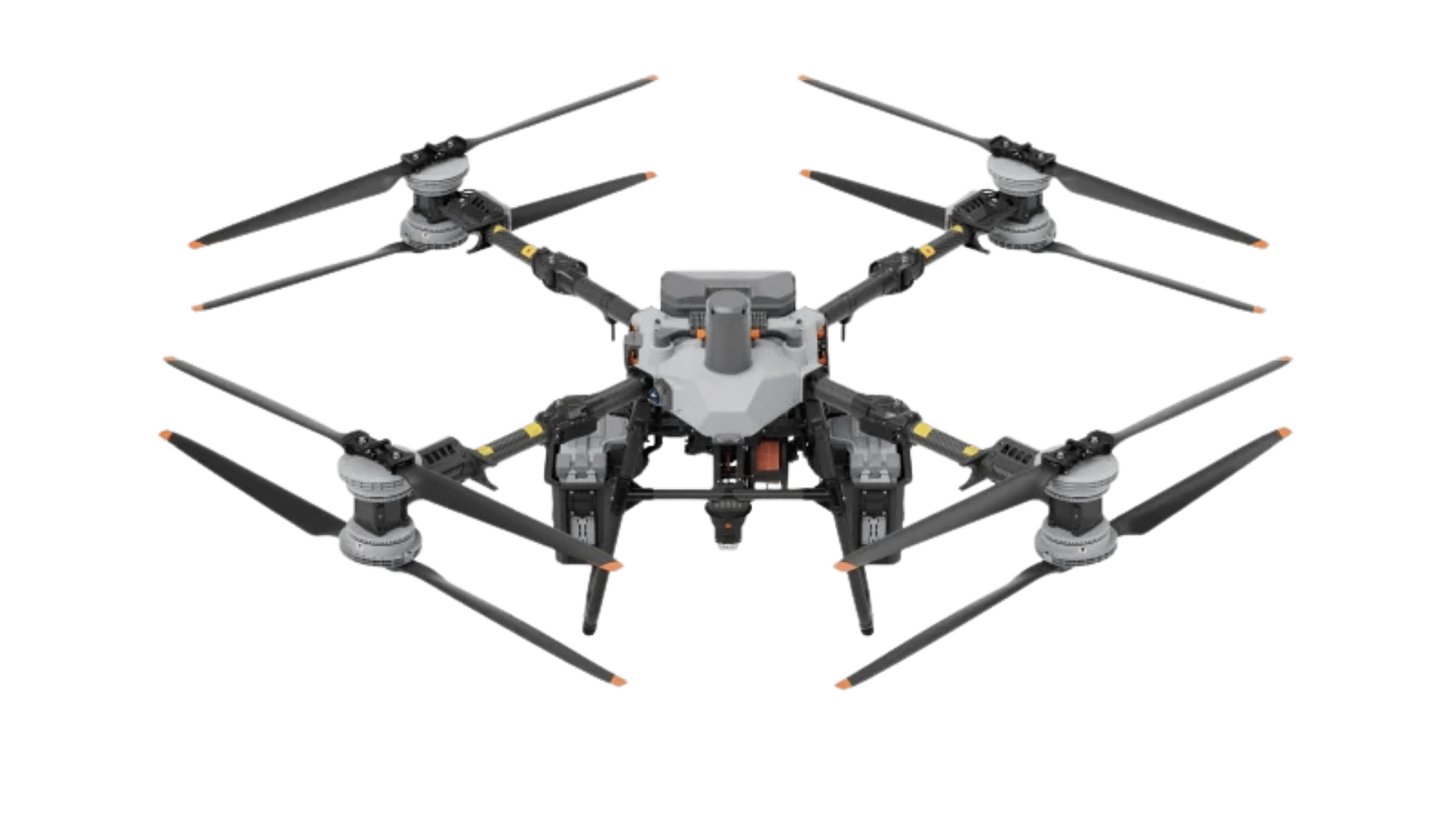
Featured DJI Enterprise Solutions
If you are:
-
Evaluating dock-based drone systems
-
Planning autonomous operations
-
Experiencing challenges with an existing deployment
MirrorMapper provides deployment consulting, system design, and dock management software tailored to Australian enterprise and government use cases.
Remote sensing, done locally.