
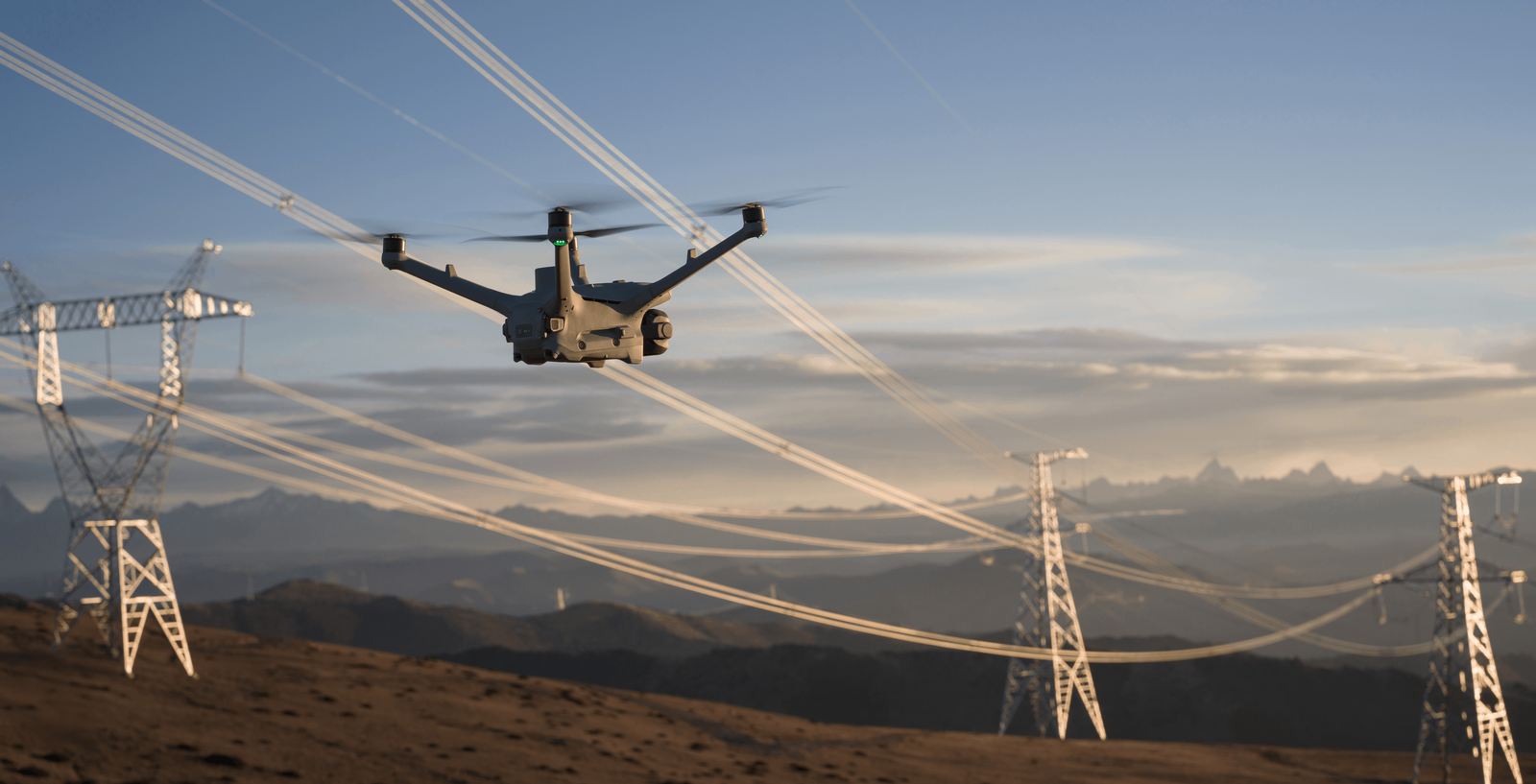
Pre-Deployment Checklist for Enterprise and Government Buyers
DJI Dock deployments rarely fail because of the hardware. They fail because site conditions, infrastructure, and operational assumptions were never tested upfront.
This checklist is designed to help organisations determine whether a site is actually ready for a docked drone system - before money is spent, approvals are sought, or expectations are set internally.
If you cannot confidently answer most of the questions below, DJI Dock may still be viable - but not yet.
1. Physical Site Suitability
Featured Products


Ask yourself:
-
Is there a clear take-off and landing zone with no overhead obstructions?
-
Are nearby structures, trees, towers, or terrain likely to intrude into flight paths?
-
Can the dock be installed on a stable, level, and secure surface?
-
Is the site protected from flooding, debris build-up, or vehicle interference?
Why this matters
Docked drones do not “work around” poor geometry. Every launch and recovery is automated and unforgiving. If the site is marginal, mission aborts become routine.
2. Airspace and Regulatory Reality
Confirm upfront:
-
Is the site located in controlled or restricted airspace?
-
Are nearby aerodromes, helipads, or emergency flight paths present?
-
Can your organisation obtain ongoing operational approvals, not just a one-off exemption?
-
Is there an internal owner for aviation compliance?
Why this matters
Autonomy does not reduce regulatory responsibility. Docked drones increase exposure if approvals lapse or conditions change.
3. Connectivity and Network Resilience
Minimum requirements:
-
Reliable 4G / 5G or wired internet at the dock location
-
Low-latency connectivity for command and telemetry
-
Firewall and IT approval for outbound connections
-
Contingency planning for network dropouts
Red flag
If connectivity is described as “usually fine,” it is not sufficient for autonomous operations.
4. Power and Electrical Reliability
Validate:
-
Continuous, stable power availability
-
Surge protection and grounding
-
Backup power or UPS strategy (where required)
-
Clear responsibility for electrical maintenance
Why this matters
Dock downtime is rarely caused by drones - it is caused by power interruptions. If power reliability is poor, autonomy magnifies the problem.
5. RTK and Positional Accuracy
Featured Products


Critical questions:
-
Will the site use fixed RTK infrastructure?
-
Is GNSS visibility adequate (sky view, multipath, interference)?
-
Is RTK treated as permanent infrastructure, not portable equipment?
Rule of thumb
If the drone is autonomous, RTK must be fixed. Portable RTK is a liability in docked programs.
6. Weather and Environmental Exposure
Assess honestly:
-
Typical wind conditions, not averages
-
Rain, dust, salt spray, or industrial particulates
-
Temperature extremes
-
Seasonal variability
Why this matters
Docked drones fly when scheduled - not just when convenient. Marginal environments reduce mission completion rates and ROI.
7. Mission Design and Use-Case Clarity
Be specific:
-
Are missions repeatable and predictable?
-
Do flights occur on a schedule or in response to triggers?
-
Is data value driven by consistency over time?
-
Are outcomes clearly defined (inspection, detection, validation)?
Red flag
If the primary use case is “we’ll work it out later,” the dock will underperform.
8. Human Oversight and Ownership
Confirm:
-
Who monitors operations day-to-day?
-
Who responds to alerts or failures?
-
Who owns aviation compliance?
-
Who owns the data?
Reality check
Docked drones reduce piloting effort - they do not remove accountability. Someone must own the system.
9. Integration With Operations Software
Strong indicator of success:
-
Use of centralised operations software
-
Live visibility for stakeholders
-
Mission logging and audit trails
-
Post-flight review capability
Without an operations layer, docked drones become isolated assets, not scalable systems.
10. Organisational Readiness
Ask internally:
-
Is this a pilot, or the start of a program?
-
Is there budget for maintenance, connectivity, and oversight?
-
Are expectations realistic about autonomy?
-
Is failure tolerated during early deployment?
Dock programs succeed when organisations treat them as infrastructure projects, not gadget purchases.
Quick Scoring Guide
-
8–10 checks met → Site is likely suitable
-
5–7 checks met → Site may be suitable with design changes
-
<5 checks met → DJI Dock is premature for this site
Mirrormapper’s Take
DJI Dock works best when:
-
Sites are predictable
-
Infrastructure is reliable
-
Oversight is planned
-
Expectations are realistic
Most unsuccessful deployments could have been avoided with a checklist like this.
Autonomy amplifies structure.
It also amplifies weakness.


