
Docked drone programs succeed or fail on positional reliability. While aircraft and autonomy software get the attention, RTK infrastructure is what determines whether data is repeatable, defensible, and operationally trustworthy.
This guide explains how to choose the right DJI Dock + RTK configuration, when fixed RTK is essential, and when portable solutions introduce unnecessary risk.


A simple rule applies:
If the drone is autonomous, the positioning infrastructure must be permanent.
Docked drones are expected to:
-
Fly without on-site humans
-
Repeat missions precisely
-
Launch on schedule
-
Return reliably every time
RTK is not a convenience in this context - it is foundational infrastructure.
The Two RTK Options Explained
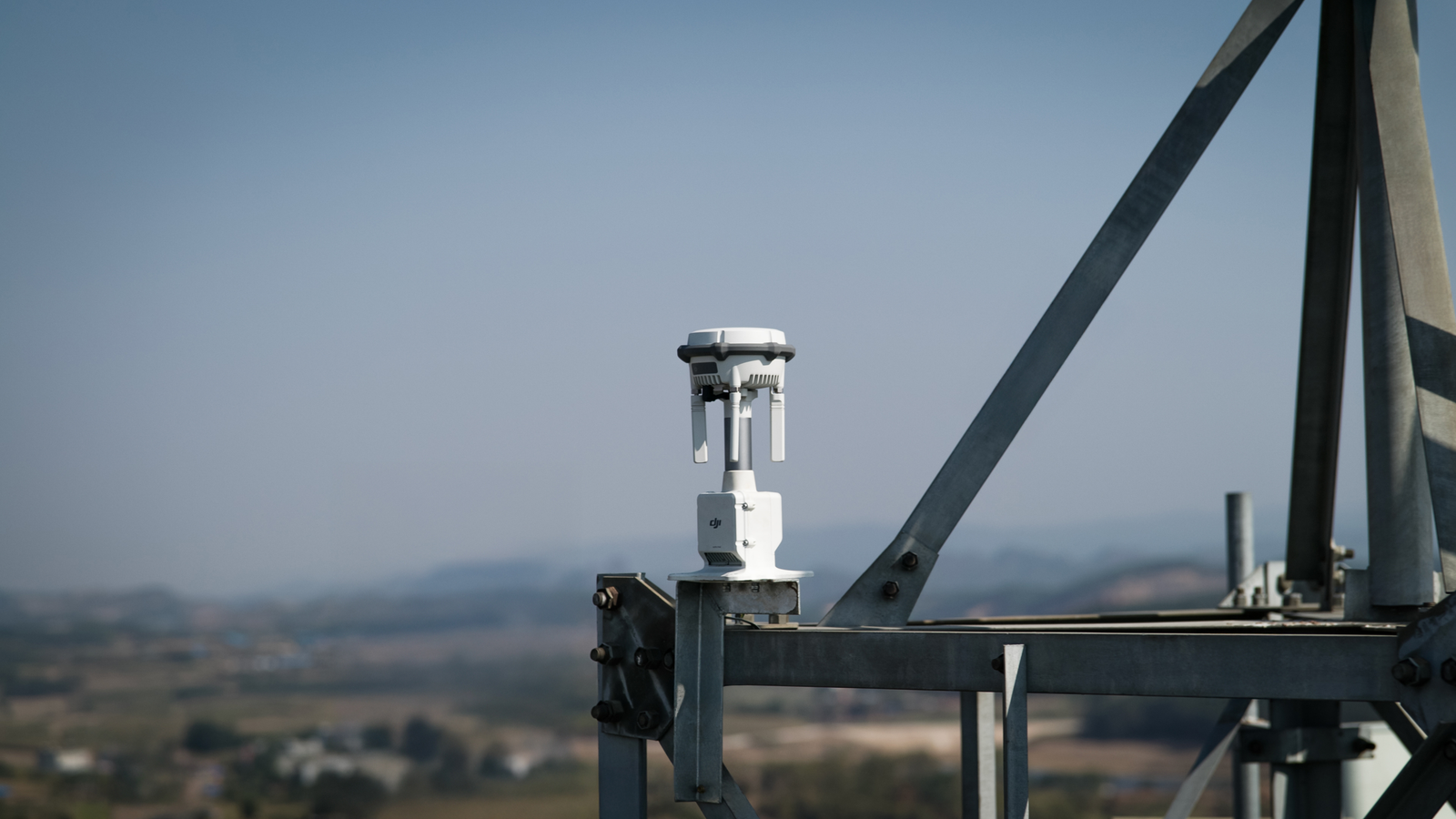
DJI D-RTK 3 Relay Fixed Deployment Version
RTK as Infrastructure
Designed for:
-
Permanent installation
-
Continuous power and connectivity
-
Fixed, repeatable missions
-
Docked and autonomous sites
Think of it as:
“RTK that behaves like network infrastructure, not field equipment.”
DJI D-RTK 3 Multifunctional Station
RTK as Equipment
Designed for:
-
Portable field use
-
Survey crews
-
Temporary sites
-
Manual or semi-autonomous flights
Think of it as:
“RTK you bring with you.”
Decision Tree: Which RTK Do You Need?
Step 1 - Is the drone docked?
-
Yes → Fixed RTK required
-
No → Portable RTK may be sufficient
If a drone is launching without a human on site, portable RTK immediately becomes a liability.
Step 2 - Are missions repeatable?
-
Yes (scheduled, routine, automated) → Fixed RTK
-
No (ad hoc, project-based) → Portable RTK
Repeatability amplifies small positioning errors. Fixed RTK eliminates drift and setup variability.
Step 3 - What happens if accuracy fails?
-
Operational delay / safety impact / re-flight required → Fixed RTK
-
Minor inconvenience → Portable RTK
If failure has cost, RTK should not depend on daily setup.
Common Dock + RTK Configurations
Configuration A - Autonomous Infrastructure Site (Recommended)
-
DJI Dock
-
Fixed RTK Relay
-
FlightHub 2 oversight
Best for:
-
Utilities
-
Critical infrastructure
-
Security and monitoring
-
Environmental compliance
This configuration prioritises reliability over flexibility.
Configuration B - Hybrid / Transitional Program
-
DJI Dock
-
Fixed RTK at primary sites
-
Portable RTK for secondary or temporary locations
Best for:
-
Organisations scaling autonomy gradually
-
Pilot programs with expansion planned
Configuration C - Non-Docked Survey Operations
-
No Dock
-
Portable RTK station
Best for:
-
Survey crews
-
Mobile mapping projects
-
Short-term sites
This is not an autonomous configuration.
Why Portable RTK Fails in Docked Programs
Portable RTK introduces:
-
Human dependency
-
Setup variability
-
Power and connectivity risk
-
Inconsistent baselines
-
Operational blind spots
In autonomous systems, these are not edge cases - they are systemic weaknesses.
Cost vs Risk: The Real ROI Calculation
Fixed RTK almost always costs less over the life of a docked program, even if initial spend is higher.
Mirrormapper’s Buyer Guidance
If you remember one thing:
Docked drones turn RTK from a tool into infrastructure.
-
If autonomy matters → install fixed RTK
-
If flexibility matters → don’t dock yet
-
If both matter → design for fixed accuracy first
Most failed dock programs do not fail because of aircraft or software.
They fail because accuracy was treated as optional.


