
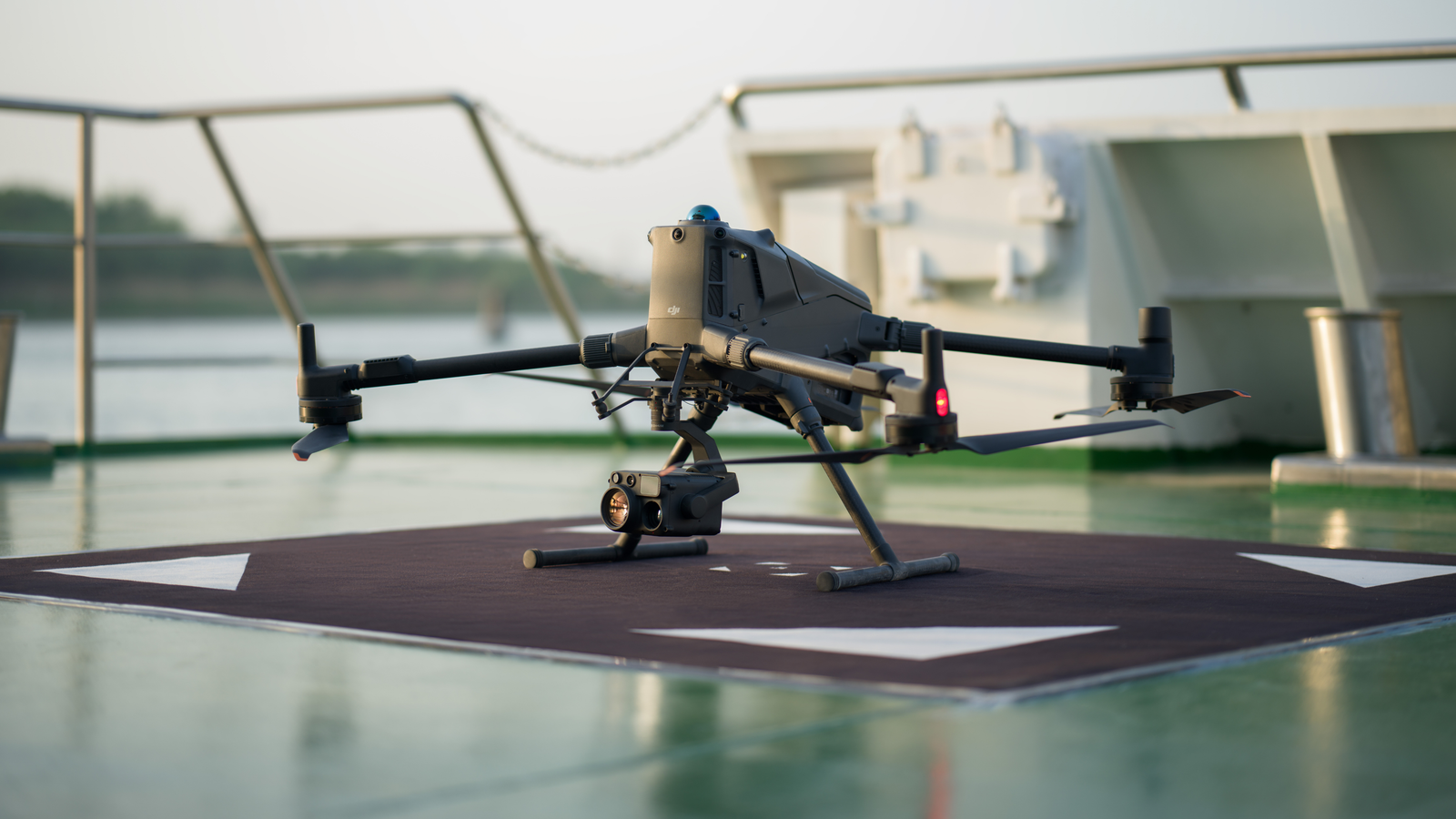
The DJI Matrice 400 sits at the top end of DJI’s enterprise aircraft line-up. It is not a general-purpose upgrade from the Matrice 300 or 350, and it is not designed to replace smaller platforms through brute force.
The Matrice 400 exists for a very specific class of operations — where payload mass, sensor complexity, endurance, and stability justify the additional cost, governance, and operational overhead that comes with a heavy-lift aircraft.
This article explains what the Matrice 400 is actually designed to do, where it delivers real value, and where it is frequently misunderstood or misapplied.
What the Matrice 400 Is
At its core, the Matrice 400 is a heavy-lift, multi-payload enterprise platform designed for missions where:
-
Payload mass exceeds the comfortable limits of M300/M350 class aircraft
-
Sensor combinations are complex (LiDAR + RGB + auxiliary payloads)
-
Stability matters more than agility
-
Endurance under load is a requirement, not a bonus
-
Data quality is tied directly to aircraft performance
It is built to carry difficult payloads well, not to fly faster or farther for its own sake.
What the Matrice 400 Is Not
This is where many buying mistakes occur.
The Matrice 400 is not:
-
A default replacement for the Matrice 350 RTK
-
A shortcut to better data without workflow changes
-
A solution for autonomy or docked operations
-
A “bigger drone = better outcomes” upgrade
If your existing aircraft already meets payload, stability, and endurance requirements, the Matrice 400 will often deliver marginal improvement at disproportionate cost.
The Real Design Intent: Payload-Driven Operations
The Matrice 400 is fundamentally a payload-first aircraft.
It exists to support:
-
Heavy LiDAR systems
-
Multi-sensor inspection payloads
-
Large optical assemblies
-
Research or industrial instruments
In these scenarios, smaller platforms are forced to compromise on:
-
Flight time
-
Stability
-
Data consistency
-
Environmental tolerance
The Matrice 400 reduces those compromises — but only when payload demands justify it.
Where the Matrice 400 Excels
The platform performs best in operations such as:
-
Utility transmission and substation inspection
-
Large-scale LiDAR capture where sensor mass and power draw matter
-
Mining and industrial environments with harsh conditions
-
Public safety and emergency response requiring heavy sensor packages
-
Scientific and environmental research using non-standard payloads
In these environments, aircraft performance directly affects data trustworthiness and mission success.
Where the Matrice 400 Is Often Overkill
Many organisations consider the Matrice 400 when they actually need:
-
Better mission planning
-
Improved data processing workflows
-
Higher pilot proficiency
-
Clearer use-case definition
Common misapplications include:
-
Standard photogrammetry
-
Routine inspections already handled by M350-class platforms
-
Organisations without governance maturity for heavy-lift operations
In these cases, the Matrice 400 increases cost, risk, and complexity without proportional return.
Operational Reality: Bigger Aircraft, Bigger Obligations
Operating the Matrice 400 changes more than flight performance.
It increases:
-
Regulatory scrutiny
-
Public risk exposure
-
Training requirements
-
Operational governance expectations
Heavy-lift drones are treated differently — by regulators, insurers, and stakeholders. Programs that underestimate this often stall after purchase.
A Simple Fit Test
The Matrice 400 starts to make sense when at least two of the following are true:
-
Payload requirements exceed what M350-class aircraft can carry comfortably
-
Mission outcomes degrade noticeably on smaller platforms
-
Data quality is limited by aircraft stability, not sensors
-
Crewed inspection alternatives are being seriously considered
-
The organisation already operates mature enterprise drone programs
If not, the Matrice 400 is likely premature.
Mirrormapper’s Take
The Matrice 400 is not a growth step — it is a specialisation step.
For the right operation, it unlocks payload configurations and data quality that smaller platforms cannot sustain. For everyone else, it introduces unnecessary complexity.
The most successful Matrice 400 deployments are driven by payload necessity, not ambition.


