
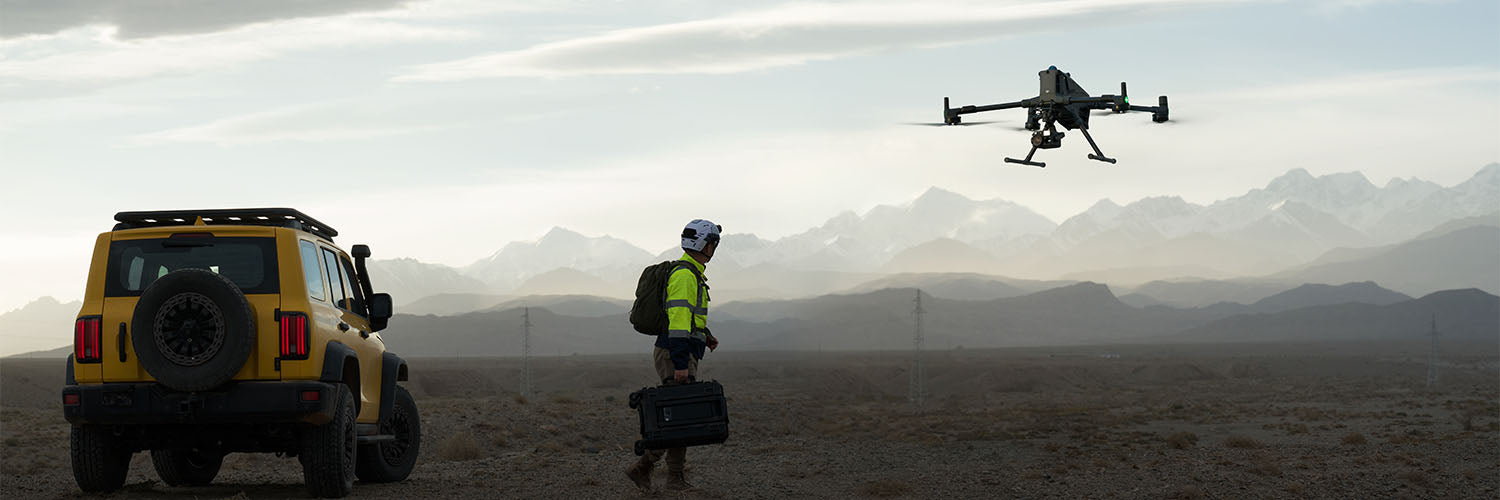
When organisations outgrow mid-class enterprise drones, the next comparison is rarely internal. Instead, buyers begin looking sideways — toward custom, niche, or specialist heavy-lift platforms that promise extreme payload capacity or bespoke capability.
This is the point where many programs drift into unnecessary complexity.
This article compares the DJI Matrice 400 against non-DJI heavy-lift alternatives, focusing on what you actually gain - and what you quietly inherit — when you move beyond DJI’s ecosystem.
The False Choice: Payload vs Professionalism
Most heavy-lift alternatives compete on raw payload numbers.
They advertise:
-
Higher maximum lift
-
Larger frames
-
Custom sensor integration
-
“Unlimited” configurability
DJI competes on something different:
-
Operational reliability
-
Ecosystem integration
-
Regulatory familiarity
-
Scalable governance
The real decision is not how much can it lift?
It’s how much complexity can your organisation absorb?
Where Heavy-Lift Alternatives Look Better on Paper
Heavy-lift alternatives often outperform DJI Matrice 400 in narrow areas:
1. Absolute Payload Capacity
Some platforms can lift:
-
Larger LiDAR scanners
-
Bespoke industrial sensors
-
Multi-instrument research payloads
If your mission cannot physically be flown by the Matrice 400, alternatives become necessary.
2. Customisation and Experimentation
Non-DJI platforms allow:
-
Deep hardware modification
-
Experimental payloads
-
Research-driven integration
This matters in:
-
Academic research
-
Defence R&D
-
Bespoke industrial testing
For these users, DJI’s constraints are a limitation — not a benefit.
Where Complexity Rapidly Overtakes Capability
This is where most enterprise buyers underestimate the trade-off.
1. Operational Overhead
Heavy-lift alternatives often require:
-
Custom SOPs
-
Bespoke maintenance regimes
-
Specialist pilots
-
Manual system integration
What looks like flexibility quickly becomes operational drag.
The Matrice 400, by contrast, is constrained — but predictable.
2. Governance and Compliance Reality
DJI aircraft benefit from:
-
Familiar regulatory treatment
-
Established safety cases
-
Insurer recognition
-
Standardised training pathways
Alternative platforms often introduce:
-
Increased regulatory scrutiny
-
Longer approval timelines
-
Higher insurance friction
-
Greater reliance on individual expertise
This is rarely visible during procurement — but very visible during audits.
3. Reliability Over Time
Custom heavy-lift platforms often perform well:
-
In controlled testing
-
With expert operators
-
Under ideal conditions
Enterprise programs need performance:
-
Week after week
-
Across multiple crews
-
In variable environments
DJI’s strength is not peak capability — it is repeatable performance at scale.
The Ecosystem Factor (Often Ignored)
The Matrice 400 sits inside a broader system:
-
Familiar flight control logic
-
Enterprise software compatibility
-
RTK and data workflow alignment
-
Cross-fleet pilot familiarity
Heavy-lift alternatives usually exist outside this ecosystem.
That separation introduces:
-
Parallel training tracks
-
Separate data pipelines
-
Increased dependency on key individuals
In enterprise environments, systems that rely on individuals do not scale.
A Practical Comparison
| Factor | Matrice 400 | Heavy-Lift Alternatives |
|---|---|---|
| Payload ceiling | High | Very high |
| Operational complexity | Moderate | High |
| Governance maturity | Strong | Variable |
| Regulatory familiarity | High | Often low |
| Scalability | Strong | Limited |
| Dependence on specialists | Low | High |
| Ecosystem integration | Excellent | Minimal |
When Heavy-Lift Alternatives Are the Right Choice
Non-DJI heavy-lift platforms make sense when:
-
Payload requirements exceed M400 limits
-
Missions are research-driven or experimental
-
Operations are limited to expert teams
-
Governance flexibility is acceptable
-
Scale is not a priority
In these cases, DJI’s structure may genuinely constrain outcomes.
When the Matrice 400 Is the Smarter Decision
The Matrice 400 is usually the better choice when:
-
Operations must scale across teams
-
Reliability outweighs experimentation
-
Governance and auditability matter
-
Training and staffing must be repeatable
-
The organisation values ecosystem consistency
For most enterprise and government programs, complexity is the enemy of reliability.
MirrorMapper’s Take
Heavy-lift alternatives are powerful — but they are specialist tools.
The Matrice 400 exists to deliver the maximum payload capability possible without breaking enterprise operability. That balance is its real advantage.
If your organisation thrives on bespoke systems and expert dependency, alternatives may outperform DJI.
If your organisation values repeatability, resilience, and scale, the Matrice 400 is often the most capable option you can realistically operate.


